Key Takeaways
- Compare car shipping companies by the service behind the quote, including equipment, carrier arrangements, communication, and booking terms.
- A broker arranges the shipment; the carrier physically transports your vehicle.
- Confirm the assigned carrier’s credentials and review applicable cargo insurance limits, terms, and exclusions.
- Open transport suits many everyday vehicles, while enclosed transport provides additional protection for specialty and higher-value cars.
- Accurate shipment details, preparation, and condition inspections help prevent avoidable problems.
What Do Car Shipping Companies Do?
Car shipping companies help move vehicles between pickup and delivery locations. Some operate the trucks, while others arrange transportation through independent carriers.
Understanding which role a company plays helps you identify who coordinates the shipment, who handles your vehicle, and who to contact during transport.
Brokers and Carriers: Who Does What?
A broker reviews your route, vehicle, timing, and transport preferences, then works to match your shipment with a suitable carrier.
The carrier operates the truck and handles loading, transportation, and unloading. The broker helps coordinate the arrangement and communication.
Bruxen Auto is a vehicle transport brokerage that arranges shipments with carriers. To understand the distinction, read our guide to car shipping brokers and carriers.
Before booking, ask who will confirm your carrier assignment, communicate pickup details, and help if your plans change.
Match the Provider to Your Shipment
A standard sedan, a non-running project car, and a low-clearance exotic may need different equipment and handling.
Confirm that the provider can accommodate your vehicle’s condition, dimensions, and transport requirements. For business shipments, explain how many vehicles need to move and whether they share pickup and delivery locations.
Explore Bruxen Auto’s transport services for an overview of available options.
How to Compare Car Shipping Companies
A lower quote can be appealing, but it is only useful when you understand what it includes. Compare providers using the same shipment details and review the written terms before deciding.
What to compareQuestions to askCompany roleAre you a broker or the carrier transporting my vehicle?Carrier detailsWhen will I receive the assigned carrier’s name and credentials?Cargo insuranceWhat limits, exclusions, and claim procedures apply?Transport equipmentDoes the quote include the trailer type and loading equipment my vehicle needs?Total priceWhat is included, and what could require an adjustment?TimingIs pickup estimated or guaranteed in writing?CommunicationWho provides updates and handles changes?Booking termsWhat are the payment, cancellation, and refund conditions?
Review Carrier Credentials and Insurance
Ask how the assigned carrier will be identified and what documentation you can review before pickup.
Discuss its cargo insurance, including applicable limits, exclusions, deductibles, and claim procedures. Do not assume that every vehicle, item, or type of damage receives the same coverage.
If the carrier changes, request the updated carrier and insurance information.
Look for Clear Communication
Find out who will coordinate your shipment and how updates will reach you.
You should know who to contact about pickup timing, location access, vehicle changes, and delivery arrangements. Ask how delays or carrier changes are communicated.
A clear process helps you plan around the practical limits of a carrier’s route, traffic, weather, and earlier stops.
Compare Reviews for Relevant Patterns
When reading customer reviews, look for recurring comments about communication, pricing changes, scheduling, and problem resolution.
Reviews describing shipments similar to yours can provide useful context. Consider the overall pattern alongside the written quote and service terms rather than relying on a single rating or testimonial.
Understand What Happens if Plans Change
Ask what happens if your dates shift, your vehicle becomes inoperable, or a carrier is no longer available.
Review the cancellation and refund terms, including whether they change after carrier assignment. Keep copies of the quote, booking documents, and any agreed updates.
How to Compare Car Shipping Quotes
Two prices are only directly comparable when they describe equivalent shipments.
Provide the Same Information to Each Company
Use consistent details when requesting quotes:
- Pickup and delivery ZIP codes or addresses.
- Vehicle year, make, model, and any relevant modifications.
- Whether the vehicle starts, moves, steers, and brakes.
- Preferred pickup timeframe.
- Open or enclosed transport.
- Special loading requirements or access restrictions.
If any detail changes, ask the provider to review the quote before proceeding.
Compare the Total Cost
Look at the full shipment price rather than the per-mile rate alone.
Longer routes often have a lower per-mile rate but a higher total cost. Vehicle size, route demand, operating condition, trailer type, and timing can all affect the amount.
Our Car Shipping Cost Guide explains these factors in more detail.
Ask What Could Change the Price
Clarify whether the quote is an estimate or a fixed price subject to stated conditions. Ask how long it remains valid and what happens if no suitable carrier is available at the proposed amount.
Confirm whether special equipment, expedited arrangements, or other requested services are included. Review any proposed adjustment before agreeing to proceed.
Check Payment Terms Before Booking
Confirm when payment is due, how it is collected, and who receives it. Ask whether any deposit or separate carrier payment applies to your arrangement.
Keep written confirmation of the agreed total and payment schedule. Do not assume that accepting a quote and confirming a shipment are the same step.
Open or Enclosed Transport: Which Should You Choose?
The appropriate transport method depends on your vehicle, budget, and handling requirements.
ConsiderationOpen transportEnclosed transportTrailerUncoveredCoveredWeather and road exposureVehicle remains exposedAdditional shieldingCommon useEveryday cars, SUVs, and trucksLuxury, exotic, classic, and collector vehiclesRelative costGenerally lowerGenerally higherSpecial loading equipmentConfirm with the providerConfirm with the provider
When Open Transport Makes Sense
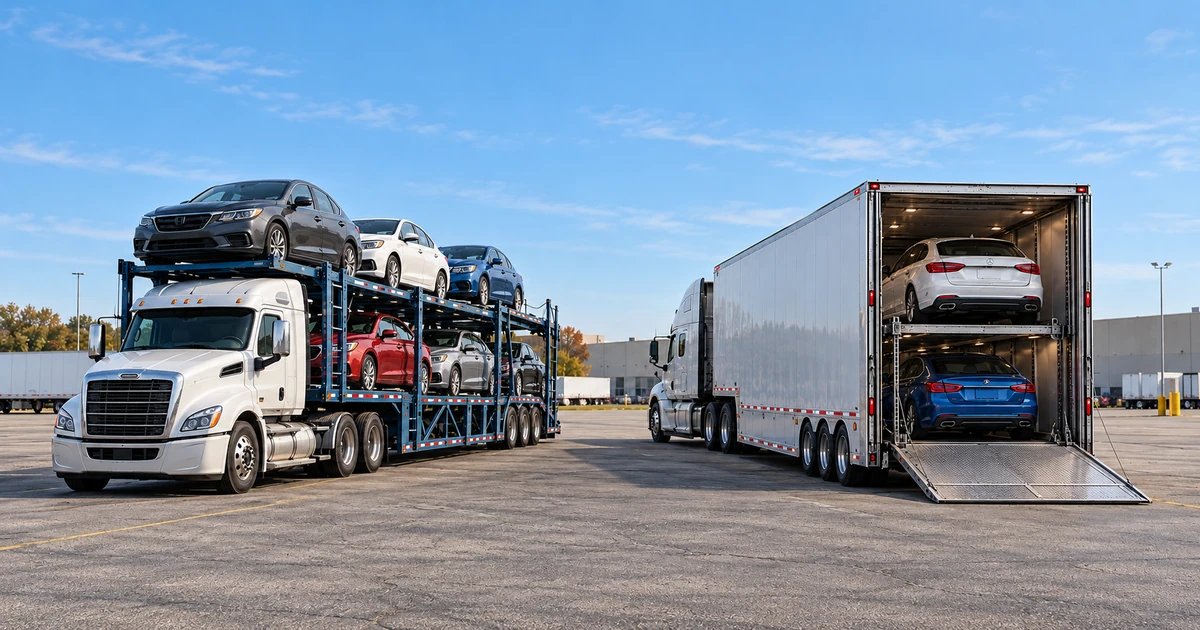
Open transport is widely used for everyday vehicles and is generally more affordable than enclosed service.
Your vehicle travels on an uncovered trailer and is exposed to outdoor conditions during transit. For many standard vehicles, open transport offers a practical balance of cost and availability.
When to Consider Enclosed Transport
Enclosed transport provides additional protection from weather and road debris. It is often selected for vehicles where condition, finish, rarity, or value makes that protection a priority.
Enclosed service generally costs more. It also does not eliminate every transport risk, so loading arrangements and condition documentation remain important.
Read our Open vs Enclosed Auto Transport guide for a fuller comparison.
Luxury, Classic, and Low-Clearance Vehicles
Discuss ground clearance, modifications, and loading requirements before accepting a quote.
Ask whether the proposed trailer has suitable ramps, a liftgate, or other equipment your vehicle needs. Do not assume every enclosed trailer uses the same loading system.
For more specific guidance, explore our Luxury and Exotic Car Transport and Classic Car Transport pages.
Non-Running Vehicles
A non-running vehicle may be transportable, but the carrier needs an accurate description of its condition.
Explain whether it can roll, steer, and brake, and disclose flat tires, locked wheels, damage, or other loading obstacles. A winch or additional equipment may be required, affecting price and carrier availability.
What to Expect During the Shipping Process
Most shipments involve providing details, reviewing a quote, confirming the arrangement, and coordinating pickup with the assigned carrier.
Request and Review Your Quote
Check that the proposed service reflects your vehicle, route, transport type, timing, and equipment needs.
Resolve unclear pricing or service details before booking. Review the applicable payment and cancellation terms and retain your confirmation documents.
Coordinate Pickup
Pickup commonly takes place within a time window. Traffic, weather, routing, and earlier stops can affect the carrier’s arrival.
Confirm the meeting location and contact details, and remain reachable as pickup approaches. Communicate any change in your availability promptly.
For more on timing, read How Long Does It Take to Ship a Car?.
Understand Door-to-Door Service
Door-to-door service generally means pickup and delivery as close to the requested addresses as safely and legally accessible.
Large trucks may be unable to enter narrow streets, restricted neighborhoods, or locations with low clearance. If necessary, coordinate a nearby accessible meeting point with the driver.
Mention known access restrictions when requesting your quote.
Inspect the Vehicle at Both Handoffs
At pickup, inspect the vehicle with the driver and review the condition recorded on the Bill of Lading or inspection report. Take clear photos and keep a copy of the documentation.
At delivery, inspect the vehicle again before signing. Compare its condition with the pickup record and photos.
Record any new damage or concern on the delivery paperwork, keep copies, and promptly contact the carrier and broker about the applicable claims process.
How to Prepare Your Vehicle
A little preparation makes inspection and loading easier.
Before pickup:
- Clean the vehicle enough to make existing damage visible.
- Remove personal belongings and unsecured accessories.
- Photograph the exterior from multiple angles.
- Disclose operating problems and loading concerns.
- Have the key ready for the driver.
- Arrange for an authorized adult representative if you cannot attend.
If the vehicle’s condition changes before pickup, tell the provider so the carrier can confirm whether the planned equipment remains suitable.
Use our vehicle shipping preparation checklist for more detailed guidance.
Comparing Options for Remote Locations, Alaska, or Hawaii
These routes may require additional coordination or transport stages.
Ask whether the quoted service covers the complete journey or only a particular segment. Confirm any port arrangements, handoff responsibilities, vehicle preparation requirements, and additional charges.
Request a route-specific timing estimate and avoid planning around an exact arrival date unless the service expressly guarantees it in writing.
Choose a Service That Fits Your Shipment
The right car shipping company should provide a clear explanation of the service, price, carrier arrangements, and booking terms.
Start with your vehicle’s requirements, compare equivalent quotes, and confirm who will keep you informed throughout the shipment.
To plan your budget, use Bruxen Auto’s Vehicle Shipping Calculator. When you are ready to discuss your route and vehicle, request a personalized transport quote.
Frequently Asked Questions
What is the difference between a broker and a carrier?
A broker arranges the shipment with a carrier. The carrier operates the truck and physically transports your vehicle. Confirm who handles coordination and when you will receive the assigned carrier’s details.
How should I compare car shipping companies?
Compare equivalent quotes, carrier credentials, insurance terms, transport equipment, communication, timing, and booking conditions. Look beyond the headline price to understand the service included.
Is open or enclosed transport better?
Open transport is a common, generally less expensive option for everyday vehicles. Enclosed transport offers additional protection and may better suit luxury, exotic, classic, or collector vehicles.
Why do car shipping quotes differ?
Quotes can reflect different shipment assumptions, carrier availability, transport methods, pickup windows, and equipment requirements. Confirm that each provider is quoting the same service.
Can a non-running car be shipped?
Often, yes, if suitable loading equipment is available. Describe whether it can roll, steer, and brake, and confirm any equipment requirements or additional charges before booking.
Are pickup and delivery dates guaranteed?
They are commonly estimated windows. Ask whether any date is expressly guaranteed in writing and what conditions apply.
What should I check at delivery?
Inspect the vehicle against the pickup report and photos before signing. Record any concern on the delivery paperwork and promptly contact the carrier and broker about the next steps.
