If you are researching how to ship a car, you will quickly see two terms everywhere: auto transport broker and carrier.
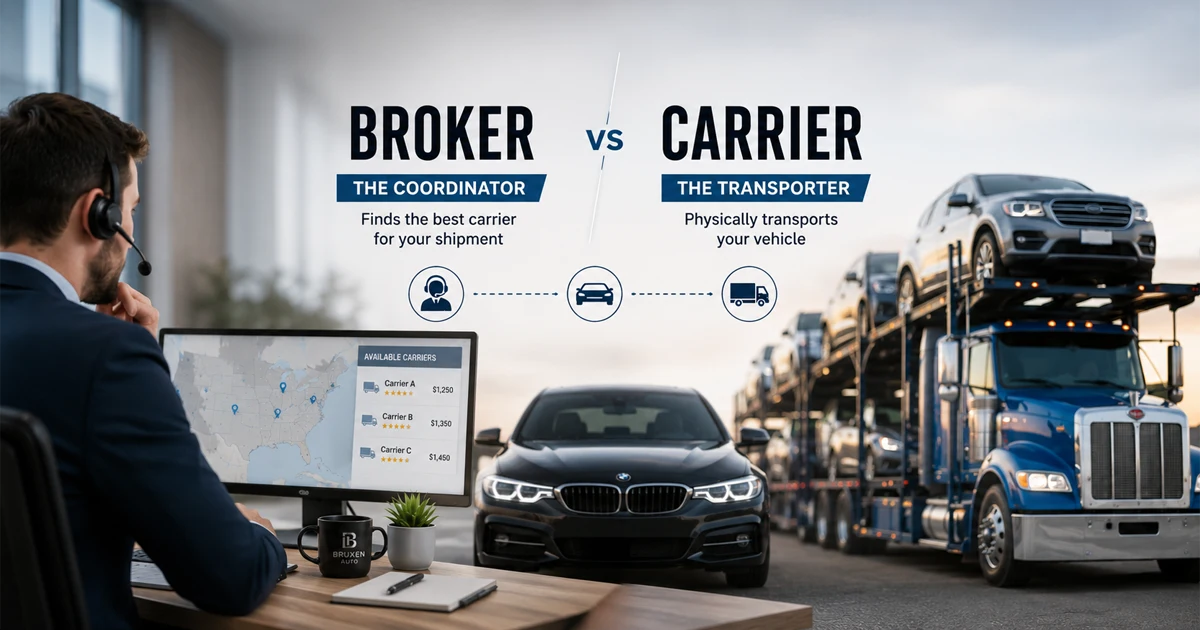
They sound similar, but they play different roles in the vehicle shipping process. A carrier is the company or driver that physically transports the vehicle. A broker helps arrange the shipment, match the customer with a qualified carrier, and coordinate the details from pickup to delivery.
Understanding the difference can help you compare quotes more confidently, avoid unrealistic promises, and choose the right shipping option for your route, timing, and vehicle type.
What Is a Car Shipping Carrier?
A car shipping carrier is the company that owns or operates the truck and trailer used to move your vehicle. The carrier is responsible for loading the vehicle, transporting it, completing pickup and delivery inspections, and moving the car safely along the assigned route.
Carriers may operate open trailers, enclosed trailers, single-car trailers, or multi-car haulers. Some carriers focus on regional routes, while others run long-distance lanes across multiple states.
When you see a vehicle transport truck on the highway, that is the carrier side of the industry.
What Is a Car Shipping Broker?
A car shipping broker helps customers arrange transportation through a network of licensed and insured carriers.
Instead of owning every truck directly, a broker works with available carriers across different routes and schedules. This allows the broker to compare availability, equipment type, timing, and market pricing before arranging a shipment.
For many customers, working with a broker is practical because one company can help coordinate the shipment even if the exact route, date, or carrier availability changes.
Bruxen Auto is a vehicle transport brokerage that coordinates nationwide shipments through professional carriers. You can learn more about our vehicle transport services at Bruxen Auto Services.
Broker vs Carrier: The Main Difference
The simplest way to understand the difference is this:
- Carrier: physically transports the vehicle.
- Broker: arranges the shipment and matches the customer with a carrier.
Both can be part of a successful shipment. The important question is not whether one is always better than the other. The better question is which option gives you the right combination of availability, communication, price, protection, and scheduling for your specific shipment.
Why Many Customers Use a Broker
A broker can be helpful because vehicle shipping is highly route-dependent. A carrier may be excellent, but if that carrier does not operate near your pickup location or is already full for your requested date, they may not be the right match.
A broker can look across a wider carrier network and find an option that fits your shipment more closely.
This can be especially useful when:
- You are shipping across multiple states.
- You need door-to-door auto transport.
- Your pickup or delivery location is outside a major metro area.
- You need open or enclosed transport.
- You are shipping a luxury, classic, or specialty vehicle.
- Your schedule requires faster carrier assignment.
If you are still learning how the overall process works, start with our Complete Guide to Car Shipping in the United States.
Why Some Customers Contact Carriers Directly
Some customers prefer to work directly with a carrier because they want to know exactly who is moving the vehicle from the beginning.
This can work well when the carrier already serves your exact route and has availability that matches your timing. Direct carrier relationships are also common for repeat dealer shipments, local moves, or regular business routes.
The limitation is availability. A single carrier can only serve the routes, equipment types, and pickup windows that fit its current schedule.
Is a Broker More Expensive Than a Carrier?
Not always.
Auto transport pricing depends on route demand, vehicle size, trailer type, distance, seasonality, pickup flexibility, and carrier availability. A broker may be able to locate multiple carrier options and help price the shipment according to current market conditions.
The lowest quote is not always the best quote. Very low pricing can lead to delays if no qualified carrier accepts the shipment at that rate. A realistic quote should balance cost, timing, and reliability.
For more detail, read our Car Shipping Cost Guide or use the Vehicle Shipping Calculator to estimate your route.
How the Broker Process Usually Works
The broker process is usually straightforward.
First, you submit your pickup location, delivery location, vehicle details, preferred date, and transport type. The broker reviews the shipment and checks carrier availability for that route.
Next, the broker provides a quote based on the details of the shipment and current market conditions. Once the shipment is confirmed, the broker assigns a carrier that fits the route and timing.
At pickup, the carrier inspects the vehicle and documents its condition. The vehicle is then loaded, transported, and inspected again at delivery.
Throughout the process, the broker helps coordinate communication between the customer and the carrier.
What to Look for in a Car Shipping Broker
A good broker should make the process clearer, not more confusing.
Before booking, look for:
- Clear explanation of pricing and timing.
- Licensed and insured carrier network.
- Transparent communication about pickup windows.
- Support for open and enclosed transport.
- Real contact information.
- Helpful guidance before pickup and delivery.
- A written confirmation of shipment details.
You can also review common customer questions on our Car Shipping FAQ.
What to Ask Before Booking
Before choosing a broker or carrier, ask a few simple questions:
- Is the quote based on current carrier availability?
- Is this open or enclosed transport?
- What is the expected pickup window?
- Is the carrier insured?
- What happens if the pickup or delivery location is difficult for a large truck to access?
- Who will communicate with me during the shipment?
The answers should be direct and easy to understand.
When Enclosed Transport Matters
For most everyday vehicles, open transport is the most common and cost-effective option. For high-value, luxury, exotic, classic, or collector vehicles, enclosed transport may be the better choice because it provides added protection from weather and road debris.
If you are deciding between the two, read our guide to Open vs Enclosed Auto Transport. You can also explore our pages for Luxury and Exotic Car Transport and Classic Car Transport.
Broker or Carrier: Which Should You Choose?
Choose the option that gives you the best combination of reliability, availability, communication, and value.
A direct carrier may be a good fit if they already operate your exact route and have the right equipment available. A broker may be the better fit if you want access to a broader carrier network, need help comparing options, or are shipping across a route where availability changes quickly.
For many nationwide shipments, a broker can simplify the process by coordinating the details and matching the shipment with a qualified carrier.
Final Thoughts
A car shipping broker and a carrier are not the same thing, but both can play an important role in vehicle transport.
The carrier moves the vehicle. The broker helps arrange the shipment, coordinate the details, and connect the customer with a suitable carrier.
If you are planning to ship a vehicle, the best next step is to compare realistic options for your route, vehicle type, and pickup timing. Bruxen Auto can help coordinate open or enclosed vehicle transport across the United States.
Get started with a personalized quote through the Vehicle Shipping Calculator or learn more about our nationwide auto transport services.
